New Forge services

You have an AI mandate. Four weeks later, one use case is running on your floor.

Not a strategy deck. Not a proof of concept that dies in a shared drive. An engineer on your site who has run the process and shipped the AI, one use case named in the first two days, in production before they leave.

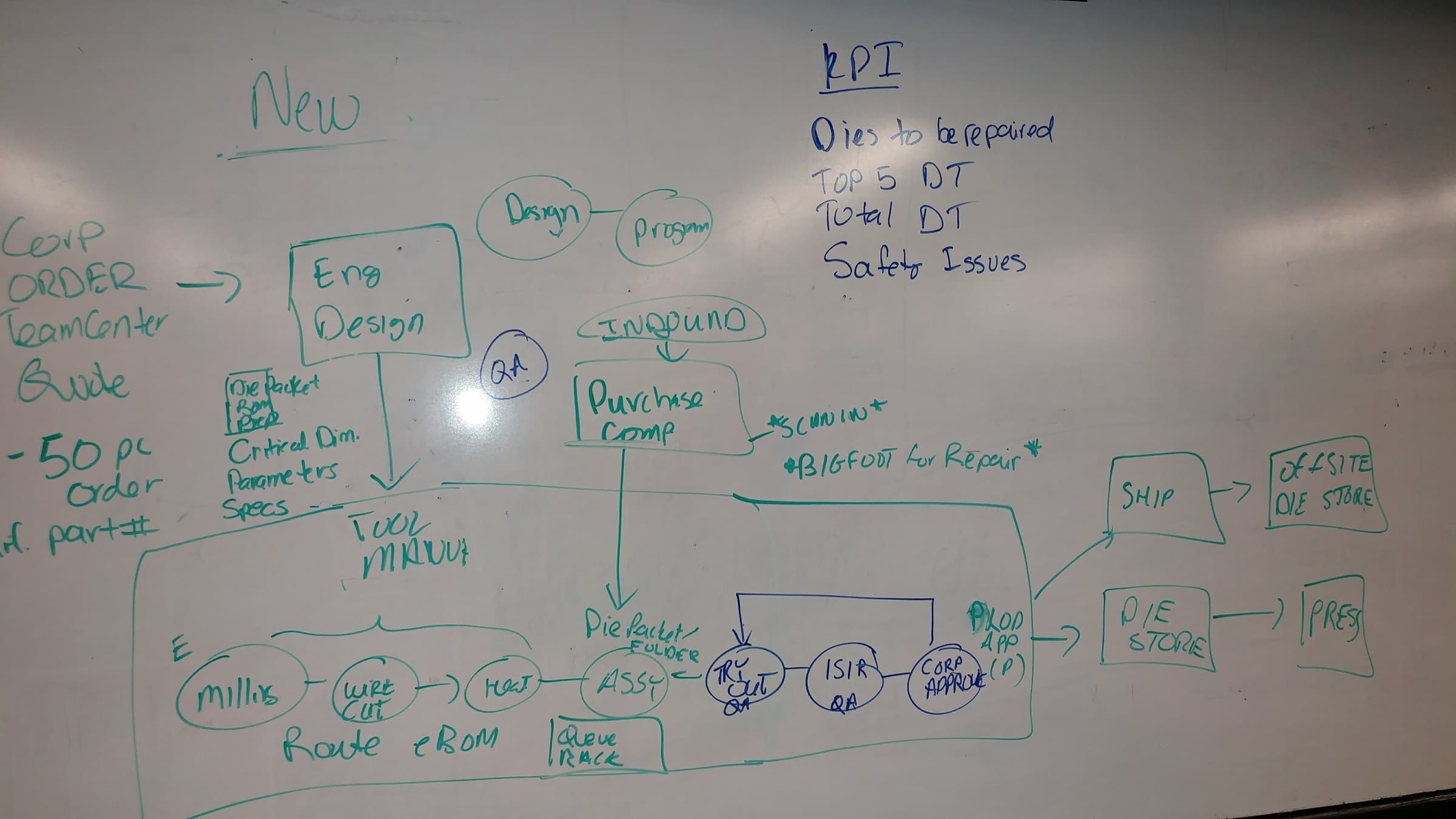
A whiteboard showing a tool and die process drawn end to end in green marker, with the quality gates circled in blue over the top.
Day two. The use case, named.

The mandate was the easy part

Somebody above you decided the plants would use AI this year. You have a number to spend and a date to report against. What you do not have is the one thing that would make the decision obvious: a specific answer to which of the hundred things happening on your floor is worth doing first, and what it looks like when it is actually done.

Every vendor in this category will tell you their product is AI powered. Almost none of them will tell you which line to put it on, what data it needs, who owns it on Monday, or what it costs when it works. That gap is where manufacturing AI budgets go to die, and it is not a technology gap. It is that the people who understand the models have never stood at a station, and the people who run the station were never asked.

This engagement exists to close that gap with one person, on your floor, for a fixed number of weeks, at a price you can read before you call us.
Sending an engineer to the plant is not the new part

Manufacturing has done this for decades. You have hosted these people. You have probably been one.

  • Resident engineer
  • Field service engineer
  • Application engineer
  • Supplier quality engineer on site
  • Launch engineer

Someone qualified shows up, works alongside your people, gets a specific thing working, trains the people who own it, and leaves. There is nothing exotic about the model and no reason to dress it in language borrowed from somewhere else. The tech industry recently discovered this arrangement and gave it a new name. Manufacturing has been doing it since before that industry existed.

What is new is not that an engineer comes to your plant. It is what this one knows.

Normally this is two people from two different firms

One of them knows your process and has never deployed a model. The other has deployed plenty and has never seen a line stop. You pay both, and you spend the engagement translating between them. The engineer on your floor here is one person with both columns.

Has run the process

  • Manufacturing and process engineering, on real lines with real takt
  • Production scheduling, and what happens when the schedule meets reality
  • Track and trace, serialization and component genealogy
  • Work instructions for assembly, authored on the floor with the people building
  • Plant-floor dashboards, built and integrated and actually watched
  • MES, ERP, CMMS, PLC and vision system integration
  • Quality systems, checks in sequence, holds, containment

Has shipped the AI

  • AI systems deployed into production, not stalled in pilot
  • Agents designed, built and deployed against real operational data
  • Skills written, tested and deployed as working capability
  • Model behavior evaluated against manufacturing edge cases, not benchmarks
  • Built manufacturing software with AI at the core, which is ForgeOS

The second column is why the first four weeks can end in production rather than in a recommendation. Knowing how to build an agent is not interesting on its own. Knowing which twelve minutes of an operator’s shift an agent should touch, and that the answer is usually none of them, is the part that took twenty seven years.

What counts as a use case

Something you can state as one sentence about what changes on the floor. If it cannot be written like these, it is not a use case yet, and turning a mandate into one is what the first two days on site are for.

Every unit carries its own record

Serial, components, revisions, measurements, who checked it. Written as the unit is built rather than reconstructed from paper six months later when the customer asks.

The check cannot be skipped

Torque value, vision result, operator sign-off, in sequence, with a hold the line cannot pass. The escape that costs you a containment does not leave the cell.

The instruction knows what is in front of the operator

Variant, revision, scanned serial, the previous step result, a fault code. The screen changes to match the part rather than making the operator find the right page.

Downtime is raised where it happens

The operator reports it from the station with what they actually saw, it reaches maintenance as a work order, and the reason code is captured while it is still true.

The schedule reaches the station and the result comes back

Production orders arrive at the line from the ERP, completions and consumption write back. Nobody retypes a number into a spreadsheet at end of shift.

The expert is one tap away

A specialist sees what the technician sees and talks them through it. We rolled this out across a global service organization and a national dealer network before ForgeOS existed.

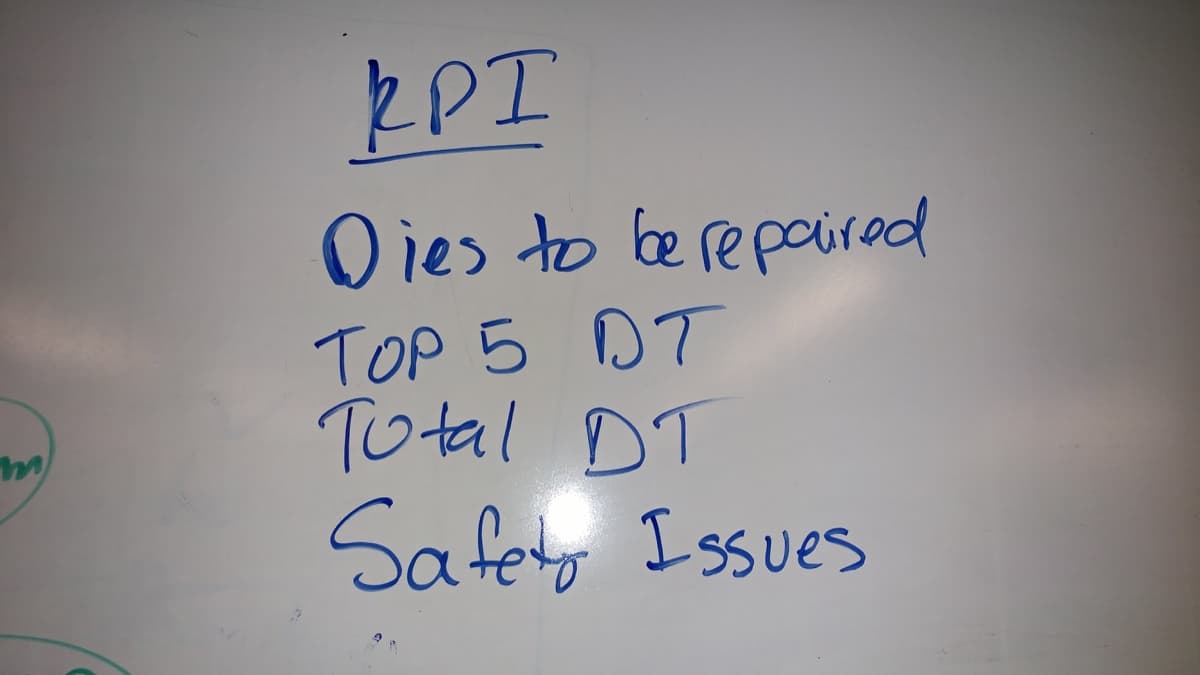
Four KPIs written on a whiteboard in blue marker: dies to be repaired, top five downtime, total downtime, safety issues.
A use case is a sentence, not a category.

One engagement. Every rule printed.

The rules are here rather than in a contract because the fastest way to waste your budget and our time is to discover any one of them on week three.

Four-Week Residency

One use case running in production on one line, with the people who run that line able to keep it running.

$25,000

Elapsed
Four weeks elapsed

How long the engagement sits on your calendar, start to handover.

Delivery
Ten days on site or engaged

Engineer time inside those four weeks. On the floor for the parts that need the floor, engaged for the rest.

What it covers

  • One use case, taken from whiteboard to production
  • The line modeled: stations, routing, revisions, checks
  • Work instructions authored with your operators, not for them
  • One integration to a system you already run
  • A floor dashboard showing what the use case now measures
  • Training for the people who own it after we leave

The four rules

  1. One use case. Named and agreed in the first two days. Additional use cases are a separate engagement.
  2. Site access, network access and a named point of contact confirmed before the clock starts.
  3. Runs on ForgeOS. This is not a build on your stack.
  4. Four weeks elapsed, ten days on site or engaged. Fixed at signing, not four weeks plus revisions.
Scope this engagement →

Day rate: $2,500 per day

For work outside a signed residency. Minimum two days, booked against availability.

One residency is what we sell today. More use cases, more lines and more sites are real work and we do them, but they are scoped as their own engagements rather than sold off a page before the first residency has run. The engagement price covers the delivery; the ForgeOS subscription that carries the use case afterwards is separate and priced on the Method page. If your constraint is multi-site rollout and integration rather than a first use case, that is a different engagement and it lives on Quick Start.

Seven plants before this was a product

Seven connected-worker deployments across automotive, appliance, industrial and logistics. BSH, Bühler, BMW North America, DHL Supply Chain and Unipres among them. We implemented, customized, integrated, trained and supported those rollouts, and for two of them we shipped the operator experience under the customer’s own brand.

That is the residency model, run at scale, for years, before it had anything to do with AI. We learned what works on a floor, what breaks at scale, and how long the second site really takes. ForgeOS is what we built when we wanted to do it our way, and it is the reason a four-week engagement can end in production instead of in a plan.

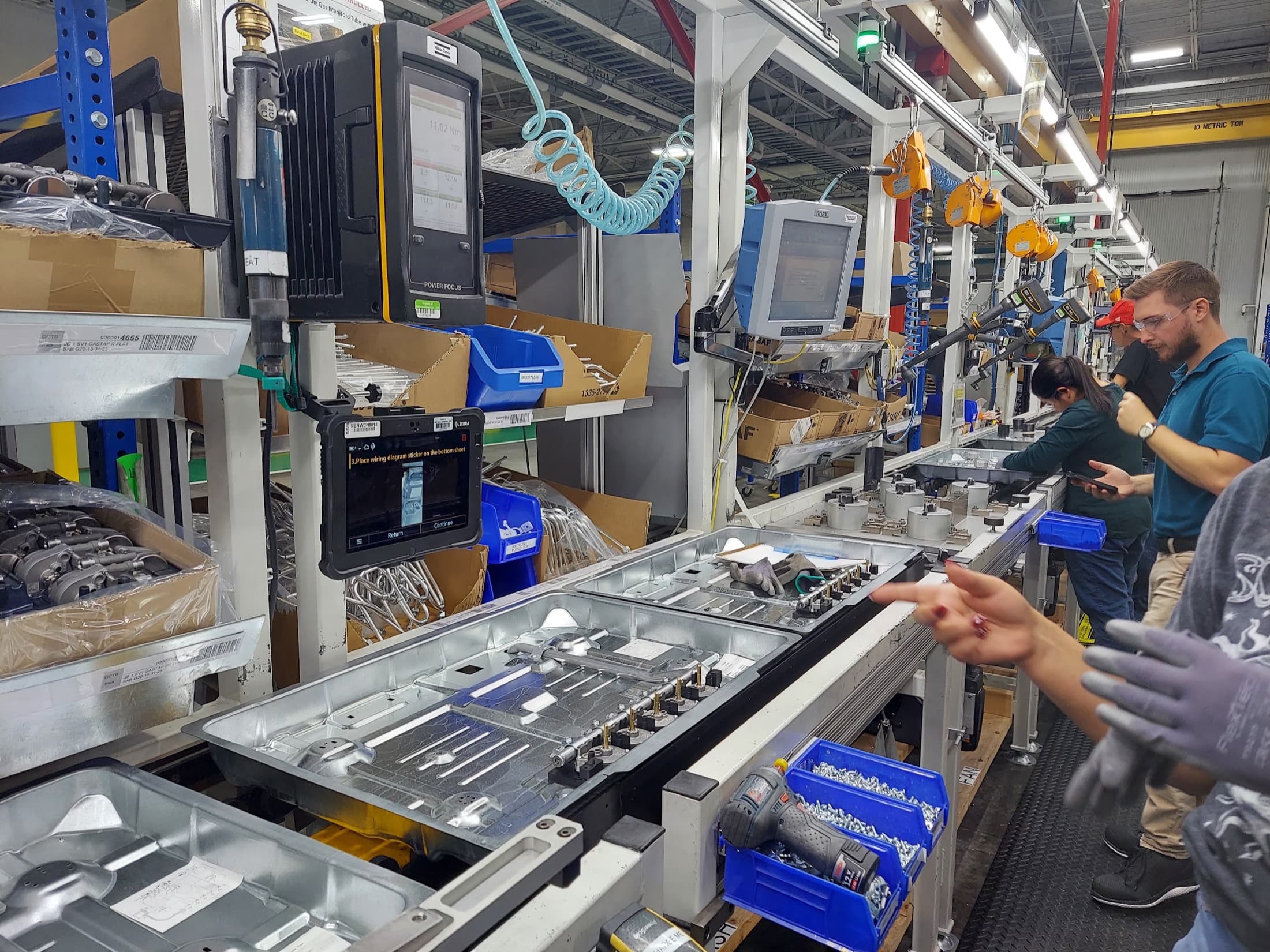
A ruggedized tablet mounted at an assembly station, showing the current work instruction step beside the parts and torque tool it refers to.
The payoff is on the screen at the station.

If you cannot name the use case yet

Then start smaller and say so, rather than buying a residency and spending week one deciding what it is for. The Launch Pilot is six weeks on one line at $2,500, it answers whether this works on your floor with your operators, on one invoice.

A residency is the right call when you already know roughly where the money is and the constraint is that nobody has the time or the combination of skills to go get it.

Start with a Launch Pilot instead →

Common questions

Is this consulting, or an assessment?

Neither. An assessment produces a slide deck and a recommendation. This produces a use case running in production on your line, on ForgeOS, before the engineer leaves. There is a scoping conversation in the first two days that names the use case, but it is the start of the build rather than a deliverable you pay for on its own.

What does "one use case" actually mean?

Something that can be stated as a sentence about what changes on the floor. Every unit built on line three carries an as-built record with component genealogy. The torque check, the vision result and the operator sign-off happen in sequence with a hold the line cannot pass. Downtime is raised from the station and reaches maintenance as a work order. If it cannot be written that way it is not a use case yet, and the first two days on site are what turn a mandate into one.

Why does it have to run on ForgeOS?

Because that is what makes four weeks possible. The alternative is building the underlying system before building the use case, which is the reason this category has a reputation for eighteen month projects. ForgeOS already runs the instruction, the checks, the record, the schedule and the integrations, so the four weeks go into your process rather than into plumbing. If you need a build on your own stack, this is not the right engagement and it is better to know that now.

We already have an AI initiative. Where does this fit?

Usually as the first thing in it that reaches production. Most manufacturing AI programs stall between an approved budget and a deployed system, because the people who understand the models have never run a line and the people who run the line are not being asked. This engagement collapses that gap into one person on site for a fixed number of weeks.

What happens after the engagement ends?

The use case keeps running and the plant moves onto a ForgeOS subscription. The engagement price is for the delivery, and the subscription is separate and published. Additional use cases, additional lines and additional sites are scoped as their own engagements, which is the rule that keeps a fixed duration honest.

Who is the engineer?

Someone who has done both halves of the job: manufacturing and process engineering on real lines, and AI systems built and deployed into production. That combination is the entire reason this offering exists. The engineer on your floor is not a delivery resource assigned from a bench, and you will meet them on the first call rather than after signing.

What if we are not ready to name a use case?

Then start smaller. The Launch Pilot is six weeks on one line at $2,500 and it answers whether this works on your floor before you commit to a residency. Coming into a residency without a use case you can name means spending the first days deciding, which is delivery time you paid for.

Do you work on site the whole time?

No, and the page is deliberate about the difference. Four weeks is elapsed time, how long the engagement sits on your calendar. Ten days is delivery time, the engineer time inside it. Those ten days are on site for the parts that require the floor, which is the scoping, the process walk, the authoring with operators, the commissioning and the training, and engaged remotely for the configuration and integration work. Manufacturing has always run this way with resident and field engineers, and the schedule is agreed at signing rather than improvised.

Bring us the line, not the strategy.

Which plant, which line, what goes wrong on it today, and what you have been told to deliver by when. Twenty minutes on those four things is enough to tell you whether a residency is the right call, or that it is not.

Book a scoping call →